Exploitative & GTO: Where Should a Poker Player Start?.
GTO is the spine. Exploitative play is the weapon. New players need to learn the standard first, then adjust flexibly against each opponent.
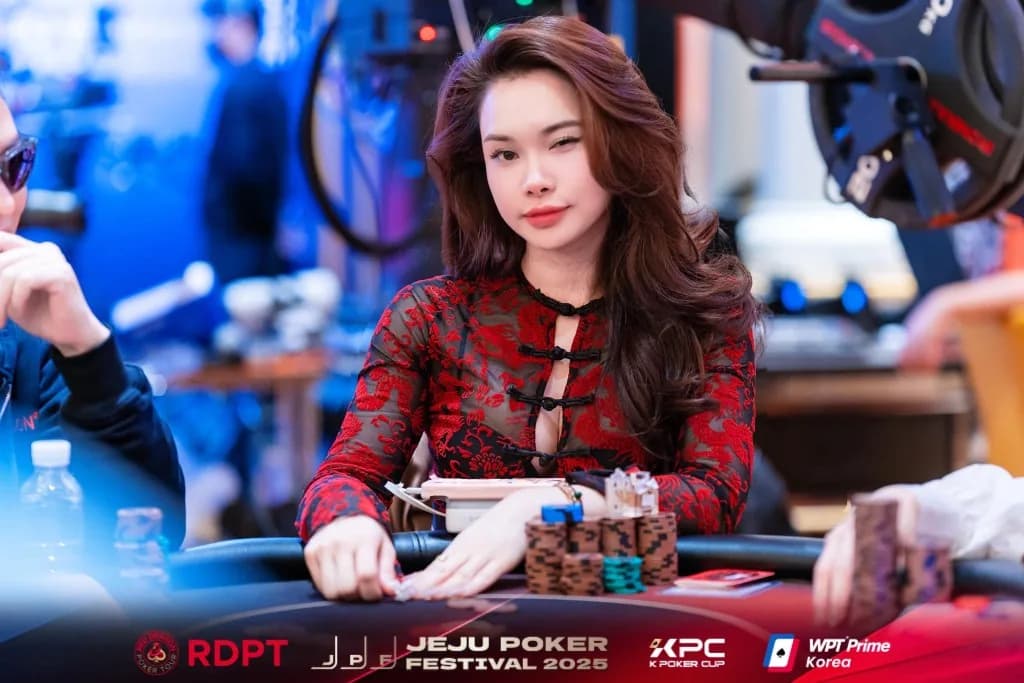
In the early days, poker was much simpler.
No solvers. No charts. No GTO.
Players relied mainly on experience, observation, and adjusting strategy opponent by opponent. If someone played too loose, you tightened up. If someone feared elimination, you applied more pressure. If someone called too much, you value-bet harder.
That is exploitative poker - a style focused on taking advantage of people.
Exploitative poker: when poker is a quiet hunt
Gemmy often compares exploitative play to a hunting animal.
It does not attack blindly. It sits still, watches, waits for the opponent to expose a weakness, and only then strikes.
Poker is like real life in that way. You do not speak to everyone the same way. With each person, you observe personality, reactions, and emotion, then adjust how you communicate.
Poker works the same way.
A strong exploitative player does not only look at their two cards. They look at opponent habits. They notice who folds too much or calls too much, who fears busting or loves hero calls, who plays too tight or too loose.
From that information, they find the best way to win more chips.
Then poker changed
As online poker grew, everything entered a new phase.
Solvers arrived. Players no longer relied only on instinct or feel. They started talking more about ranges, frequencies, EV, and GTO.
GTO, simply put, is a style like a solid fortress wall: not exposing too many holes for opponents to exploit.
It sounds impressive. But in practice, many people misunderstand it.
The biggest mistake: thinking GTO is absolute truth
One of the most common mistakes is thinking GTO is the final answer to every situation.
Many people study GTO, open a chart, and play exactly like it. Solver bets this much, so I bet this much. Chart says do this, so I do exactly that. They barely care who is sitting in front of them.
But poker is not a game between a human and a machine.
Poker is a game between humans.
And humans have emotion, fear, habits, and sometimes act very irrationally. If you only play GTO without observing opponents, you may play very by-the-book and still miss many chances to win extra chips.
Like life: living with principles is good. But if you cannot adapt to context, you will struggle to go far.
So is exploitative the answer?
Not necessarily either.
Exploitative play done well can help you win very fast. But if you exploit too hard without foundation, opponents can notice and counter you.
For example, if you fold the river too often, opponents can recognize that and start bluffing you constantly.
If you only bet when you have a strong hand, opponents will eventually figure it out and fold whenever you bet. Then you stop winning extra chips.
Exploitative play is very powerful, but without a solid framework behind it, it is like hunting while exposing your position.
So where should a player start?
In Gemmy's view, the right path is: learn GTO to know how to play correctly, then use exploitative adjustments against each person.
GTO helps you understand reasonable opening ranges. It helps you know which spots should bet, which should check, and which situations should not drift too far from basic strategy.
But when studying GTO, do not only ask: what does the solver do?
Ask: why does the solver do that?
When you understand the reason behind a decision, you stop depending entirely on charts. You start understanding the nature of hand vs range, why one spot should bet, why another should check, and why some spots need balanced play.
Then you can adjust at a real table.
GTO is like the right-and-wrong foundation in your thinking. With that foundation, you can flex without getting lost easily.
And only then does exploitative play truly show its power.
When should you exploit?
If an opponent folds too much against 3-bets, you can 3-bet bluff more than standard GTO.
If an opponent calls 3-bets very stubbornly, reduce bluffs and focus on 3-betting strong hands and value-betting all the way.
If someone bets the river and almost never bluffs, you do not need a hero call to prove anything. Just fold and keep chips for better spots.
Solvers cannot teach you these things specifically at every real table. But people always have habits. And in poker, the player who reads opponent habits always has extra edge.
Conclusion
Poker is not only for people who memorize charts well. Poker is for players with foundation, observation, and the ability to adapt at the right moment.
GTO is the spine. Exploitative play is the weapon.
Miss one of the two and you move very slowly - or you move fast at first but cannot go far.
When you know how to combine both, you truly start owning the game.
Poker does not reward players who only follow the book. Poker rewards players who understand the essence, read people, and make the right decision at the right time.

Comments
No comments yet.
Be the first to share your take on this piece.